
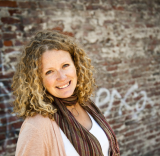
 Peers is a movement of people who believe that the time for sharing and peer collaboration has come.
What were you doing prior to Peers, and what attracted you to this new movement?
Peers exists at the intersection of technology and social movements, which is a space I’ve lived in for a long time. Working with the Sierra Club, MoveOn.org and with Obama’s Organizing for America, I’ve seen the amazing things grassroots movements can do with the aid of technology — protect the environment, create communities, elect presidents.
Most recently, I co-founded Rebuild the Dream, a bottom-up platform to fix the U.S. economy. Much of our work had been focused on solutions rooted in politics, but like a lot of people, I was frustrated with the deep fissures in beltway politics.
I was incredibly inspired by the people, all over the globe, who are turning to one another to build a peer economy – from babysitting cooperatives and time banks to people sharing homes, cars, skills and time. It’s a growing movement that’s helping people pay the bills, work flexible hours, meet new people, or spend more time with their families. I believe it’s how the 21st century should work.
New innovations are coming up every day, and new places are joining in. My parents live in a small town in central Kansas, where the only general store recently went under. The community came together and collaboratively funded their own, locally-owned store to replace it — not just as a place to buy stuff, but as a community and social center. Solutions like this one are working all over the world. With a huge gap in income inequality, waste and over-consumption, and an increasing sense of isolation, People are turning to one another to build the economy they want to see — and that’s what Peers is about.
What do you think the biggest challenge facing the sharing economy is?
This movement is already huge, but most of the people driving its growth don’t feel it yet. Our work to mainstream the sharing economy is about telling the movement’s story. We want people to see the connections between the individual benefits they’re already experiencing in the sharing and peer economy, and the community-wide, city-wide, and world-wide benefits that are coming out of the broad network of sharing solutions.
It’s a big challenge, because sharing is both simple and hugely radical. It’s easy to participate, and easy to forget that sharing and peer collaboration provide an alternative to an economic model that has been dominant for decades. After generations of centralized wealth, production, and control, this is a new, distributed model that creates more value for everyone involved.
Telling the story that connects the person renting out their spare room in Paris with the person participating in a shared tool library in Detroit is necessary to move the sharing economy forward. People are also realizing that they’re not just “users” or “participants,” but that they’re the ones driving this new economy. That has to happen before people can come together and lead the conversation about what’s next.
That’s what Dinner with Peers was all about. Since our launch, people had been asking us to help them coordinate sharing meet-ups in their cities. This October, 166 members made it happen – stepping up to host potluck-style dinners in homes, cafes, and other shared spaces. There were Dinner With Peers events in 92 cities around the globe. At these gatherings, members broke bread, got to know each other, and talked about their experiences and hopes for the sharing economy.
I attended an event in San Francisco and skyped into an event in Barcelona, and have been following the amazing photos and ideas that members have been exchanging on social media (we’ve gathered them on our Tumblr). Fellowship goes hand-in-hand with sharing, and it is crucial for social change. The community spirit we experienced at Dinner with Peers was a sign that we’re onto something big.
How will Peers tackle these challenges to grow the sharing economy?
I always go back to the power of member-driven movements, and the amazing things they can accomplish. At Peers, our members drive our work and will always be our priority.
Soon after we launched, our members started reaching out with concerns about tangible threats to sharing in their communities, and ways that we could help. We offer digital tools (like petitions), connections to other members and huge numbers of people through our partners, as well as storytelling through the media and social media, to help these efforts resonate.
We’ve had promising successes so far. In California, we rallied together more than 200 members who wanted to legalize ridesharing through services like Lyft and Sidecar, which allow anyone with a car to offer a ride to anyone on the platform. These members attended a meeting of the California Public Utilities Commission that successfully legalized these services, creating new rules that work for everyone.
Similarly, in New York, we’re currently in the midst of a big campaign around Airbnb, a platform that allows people to share their homes by renting out unoccupied living space for short-term stays. After the state’s Attorney General subpoenaed Airbnb for personal information on thousands of hosts in New York, our members were upset that the current law targets individuals. Peers member Mishelle started a petition on Peers.org calling for a new law that would make Airbnb legal.
Mishelle is a veteran, and occasionally renting her apartment helps generate extra income for going back to school. Her powerful personal story has inspired tens of thousands of people — she blew past her goal of 20,000 signatures in just a couple of days. The petition right now is over 73,000 and still going strong.
These kinds of campaigns are setting important standards. By supporting our members to shape the way sharing works in their specific communities, we’re also working to show the way forward for cities and countries everywhere. The CPUC decision showed that citizen-driven regulation is possible, and we hope New York follows suit. By responding directly to threats to sharing in their community, I see Peers members shaping the course of this new system, and make sure everyone can share in their community’s plenty.
Where would you like to see Peers in three years’ time?
Our big, audacious goal is to see sharing and the peer economy become the defining economic story of the 21st century. That’s where I want to see us in 100 years’ time. Three years is still a long time, and with the speed and energy that we are seeing in this rising movement, our organization can grow to be a truly global, member-driven, vibrant framework to support that movement.
I want to see Peers chapters all over the globe, where people are coming together within their communities and providing advice and support, as well as starting campaigns that shape local sharing policy. I also want to see new peer businesses and organizations springing up, and communities finding new ways of lifting each other up.
The beauty of sharing is that it’s a self-renewing resource. Every time someone shares their car, or their home, or their time, it’s more than just a single transaction — it’s an investment in trust, in community, and creates a greater value for everyone involved.