
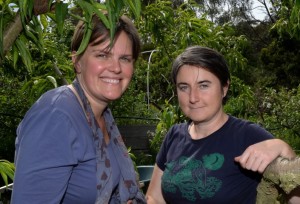
 Serenity Hill and Kirsten Larsen are co-founders of the Open Food Network, a free, open source, scalable e-commerce marketplace and logistics platform that enables communities and producers to connect, trade and co-ordinate the movement of food.
What inspired you to start the Open Food Network?
We had both done lots of work in policy and research about how to increase the sustainability of farming and food production. We realised that the basic economics of commodity markets were stacked against farmers. Chasing small margins, farmers are often forced to manage for the short-term and push the land beyond its capacity. We realised that the only way to break this cycle was to develop an alternative marketplace and distribution system that could scale beyond a niche.
How does it work?
Eaters/consumers can come to the Open Food Network and browse independent stores run by producers and food hubs to find offers that meet their needs. Even when they buy food through “hubs” – diverse enterprises that sell food from more than producer – transparency is maintained back to the producers. They can connect with the story of the producer, read about their production practices and see how much they’ve been paid. For producers and hubs, it provides tools to manage inventory, payments, orders and customers. It also makes it easy for hubs and producers to find trading partners and to collaborate on logistics.
How does the Open Food Network benefit farmers and consumers?
Our ultimate goal is fair price to farmers and affordable good food to eaters. We want to support a fair marketplace for food and also provide the tools for producers to work with each other and food hubs to get efficiencies in the supply chain to keep the costs down for everyone.
What’s the advantage of being open source in comparison to other services like Food Assembly, FarmDrop and Farmwell?
We are not for profit and open source. This means that we can build a community of contributors and supporters across the world – working together on a common goal rather than reinventing the wheel.
Why is the open food space so dynamic right now?
We are based in Australia but very quickly found a common need and common stories all across the world. As alternative food distribution and marketing initiatives are getting more traction, they need the information infrastructure to support scale. We’ve also designed OFN to support diverse models, recognising the need to be able to respond to local context. We are already working with partners to get Open Food Network up and running in UK, Norway and South Africa. We have a lot of other interest from other parts of the world. This means we can pool resources for a common goal and also share related learning and experience to speed up innovation
Tell us about your upcoming launch.
We are launching in Australia over June. We’re also very excited to be nominated for a “collaborative consumption” Ouishare Award. Online voting is open until 20 May – vote for us here!

This initiative would be a great contribution to the awareness campaign running on civocracy.org right now!